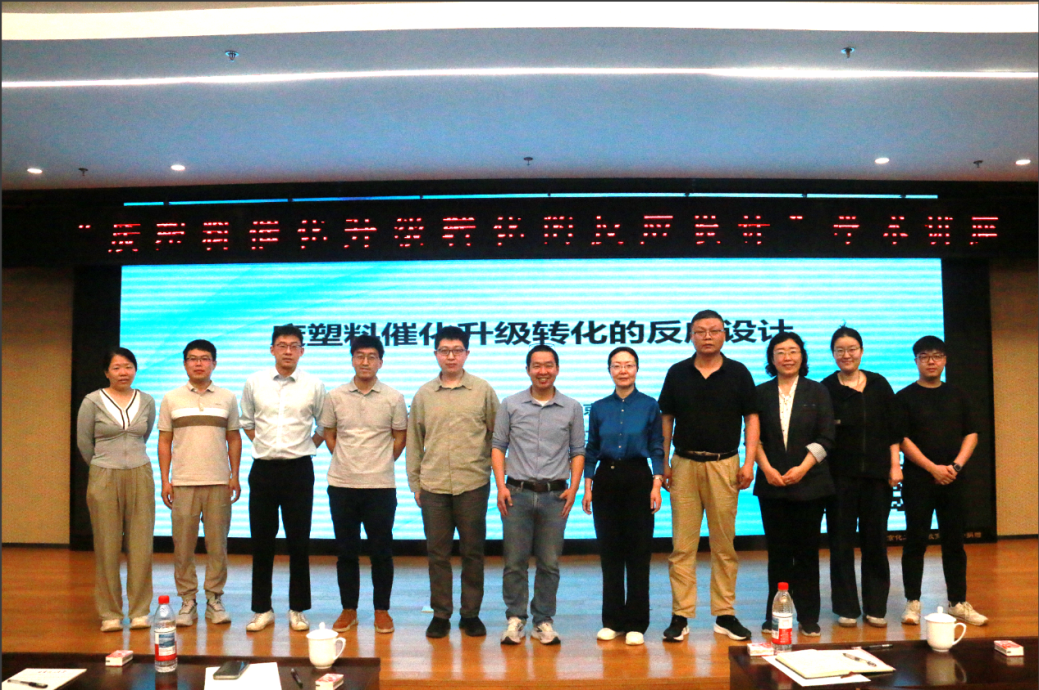
On the morning of May 25, 2026, the College of Chemistry hosted an academic seminar titled “Reaction Design for Catalytic Upcycling of Waste Plastics”, featuring a presentation by Researcher Wang Meng from Peking University. The seminar focused on strategies for recycling real mixed plastic waste and introduced new approaches developed by Wang Meng’s research group for recovering different structural components of plastic waste based on their elemental compositions and functional groups. The methods are applicable to mixed plastic waste containing polyolefins, polystyrene, polyesters, polyvinyl chloride, and other polymer materials. More than 200 faculty members and students attended the seminar.
Professor Wei Min delivered opening remarks on behalf of the College of Chemistry, welcoming Researcher Wang Meng and expressing appreciation for his support of academic exchange and collaboration. She briefly introduced Wang Meng’s research achievements in catalytic upcycling of waste plastics and carbon dioxide conversion. She highlighted that the “full-component recycling” strategy proposed for real mixed plastic waste provides new insights into carbon resource utilization and the development of catalytic conversion approaches.
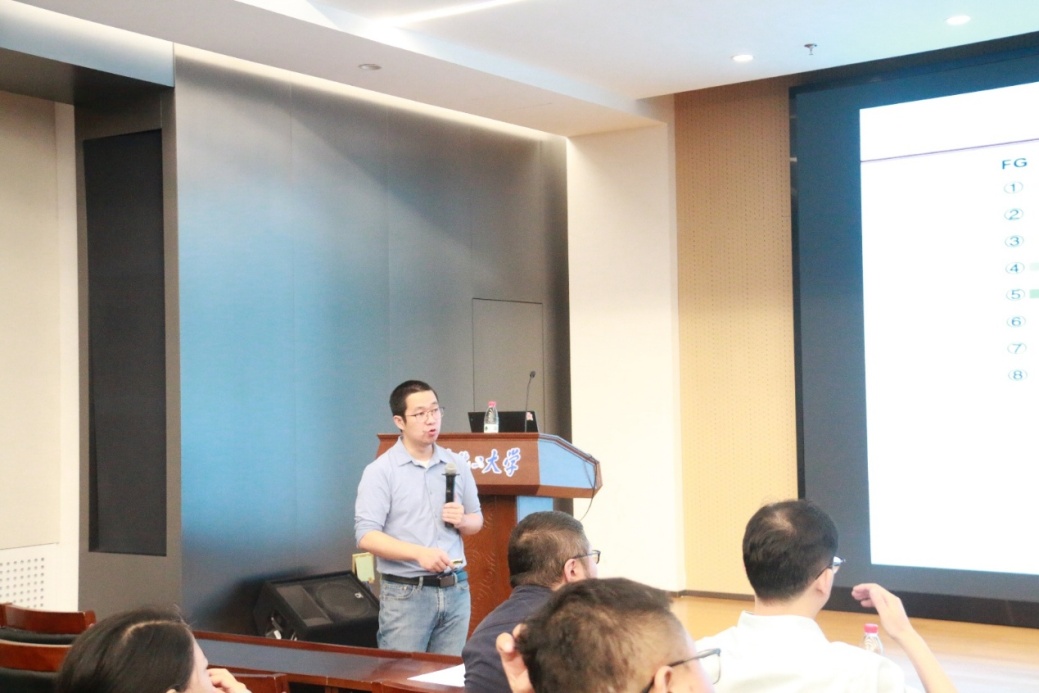
During the seminar, Researcher Wang Meng presented a detailed overview of reaction design strategies for catalytic upcycling of waste plastics. He noted that current approaches for waste plastic treatment mainly involve low-value utilization and incineration, and emphasized the importance of developing value-added conversion pathways for advancing plastic recycling. Addressing the complexity of real mixed plastic waste containing multiple polymer components, Wang introduced the “full-component recycling” approach developed by his research group. By designing reaction pathways according to polymer structures, the approach enables the selective conversion of mixed plastic waste into valuable chemical products. The presentation connected practical challenges in resource recycling with molecular-level catalytic design, helping participants better understand the underlying mechanisms and potential applications of this technology in sustainable development.
During the discussion session, faculty members and students actively participated and exchanged ideas with Researcher Wang Meng. He responded to questions regarding process optimization, catalyst selection, as well as the diversity of raw material sources and pretreatment strategies involved in plastic upgrading.
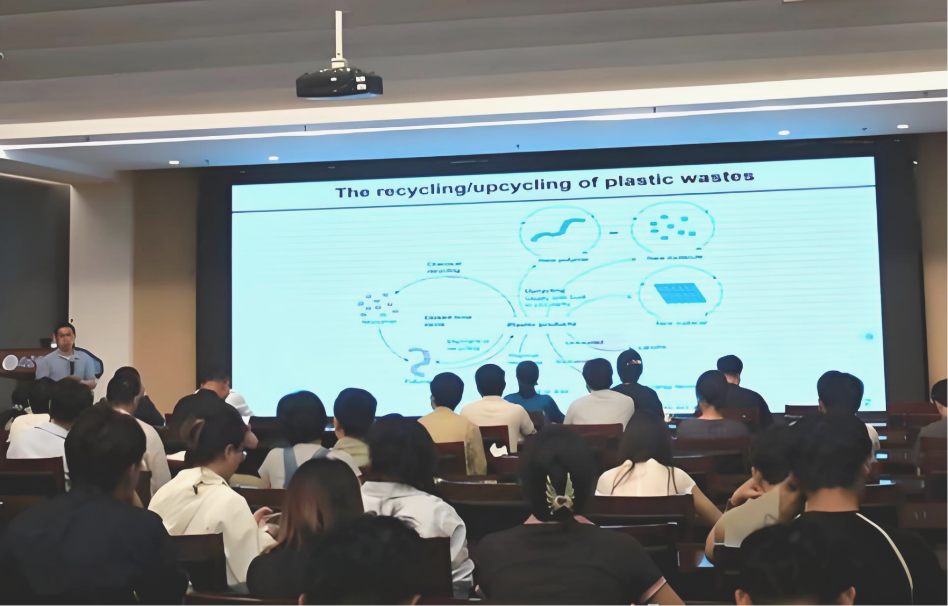
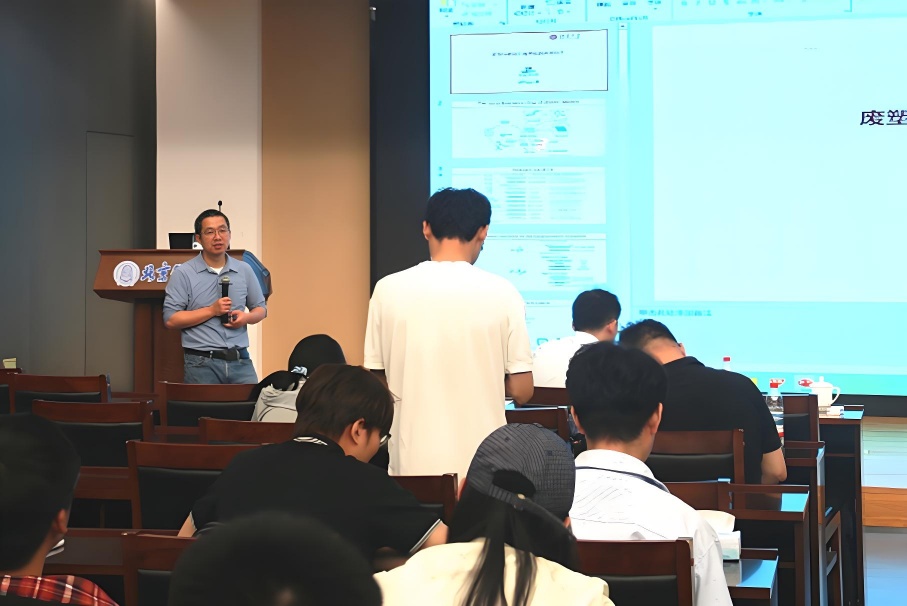
The seminar provided an overview of recent advances in catalytic reaction design for waste plastic upcycling and explored the connection between innovative chemistry and sustainable resource utilization. Participants noted that the seminar broadened their understanding of emerging research directions and provided valuable insights for future scientific exploration. Faculty members and students expressed their intention to apply the concepts and approaches discussed in the seminar to their future studies and research, contributing to the development of sustainable technologies and chemical innovation.