
Recently, the team led by Prof. Junqing Pan at Beijing University of Chemical Technology reported a major advance in electrocatalytic formic acid oxidation. By combining an atomically dispersed Ir-N₄/Pt-N₄ dual-atomic catalyst (Ir₁-Pt₁ NC) with an over-boiling-point reaction environment, the researchers decoupled the sequential oxidation steps into parallel pathways and weakened the hydrogen-bond network in the liquid phase. This structure-environment coupling substantially improved reaction kinetics and mass transport, delivering a mass activity of 125.9 A mg⁻¹ at 120 °C.
The related work, entitled "A Breakthrough in Formic Acid Oxidation by a Dual-Atomic Ir-N4/Pt-N4 Catalyst via Parallel Reaction Pathways under Over-Boiling Point Environment," was published in Angewandte Chemie International Edition. Cunpeng Duan is the first author, and Prof. Junqing Pan is the corresponding author.
Research Background:
Formic acid (HCOOH) is regarded as a promising liquid hydrogen carrier because of its high energy density, low toxicity, and potential production from biomass conversion or electrochemical CO₂ reduction. Direct formic acid fuel cells (DFAFCs), which convert the chemical energy of formic acid directly into electricity, could therefore provide clean and efficient power for portable electronic devices and related applications.
However, widely studied single-atom catalysts contain only one type of active center and face major limitations in the electrocatalytic oxidation of a complex polyatomic molecule such as formic acid. Reactive hydrogen and carbonyl-containing intermediates must pass through a lengthy sequence of catalytic steps, slowing intermediate desorption and reducing charge-conversion efficiency. At room temperature, the strong hydrogen-bond network formed by water also restricts reactant transport to active sites. These kinetic and mass-transfer bottlenecks keep the mass activity of many reported catalysts below 30 A mg⁻¹, far from the >100 A mg⁻¹ level sought for practical application. A coordinated strategy that combines catalyst architecture with reaction-microenvironment control is therefore needed.
Key Highlights:
1. Dual-atomic Ir-N₄/Pt-N₄ sites create parallel oxidation pathways
The atomically dispersed Ir₁-Pt₁ NC separates functions that would otherwise occur sequentially at a single active center. The Ir site promotes activation and oxidation of the carbonyl-containing species, while the neighboring Pt site facilitates hydrogen adsorption, desorption, and proton-transfer steps. Density functional theory (DFT) calculations show that the dual isolated coordination environment regulates the d-band center and lowers the relevant reaction barriers, thereby accelerating charge transfer and reducing intermediate accumulation.
2. Over-boiling-point operation strengthens both kinetics and mass transport
Molecular dynamics (MD) simulations show that the strong hydrogen-bond network in aqueous formic acid hinders molecular diffusion. Operation above the boiling point markedly weakens this network, accelerates transport, and induces small changes in the bond angles and bond lengths of formic acid that favor adsorption and conversion. Together with the parallel dual-site pathway, this reaction-environment effect produces a "double × double" enhancement. The catalyst reaches 125.9 A mg⁻¹ at 120 °C, compared with 10-30 A mg⁻¹ for leading single-atom catalysts and approximately 0.1 A mg⁻¹ for commercial Ir/C in the comparison reported in the source.
Figure Analysis:
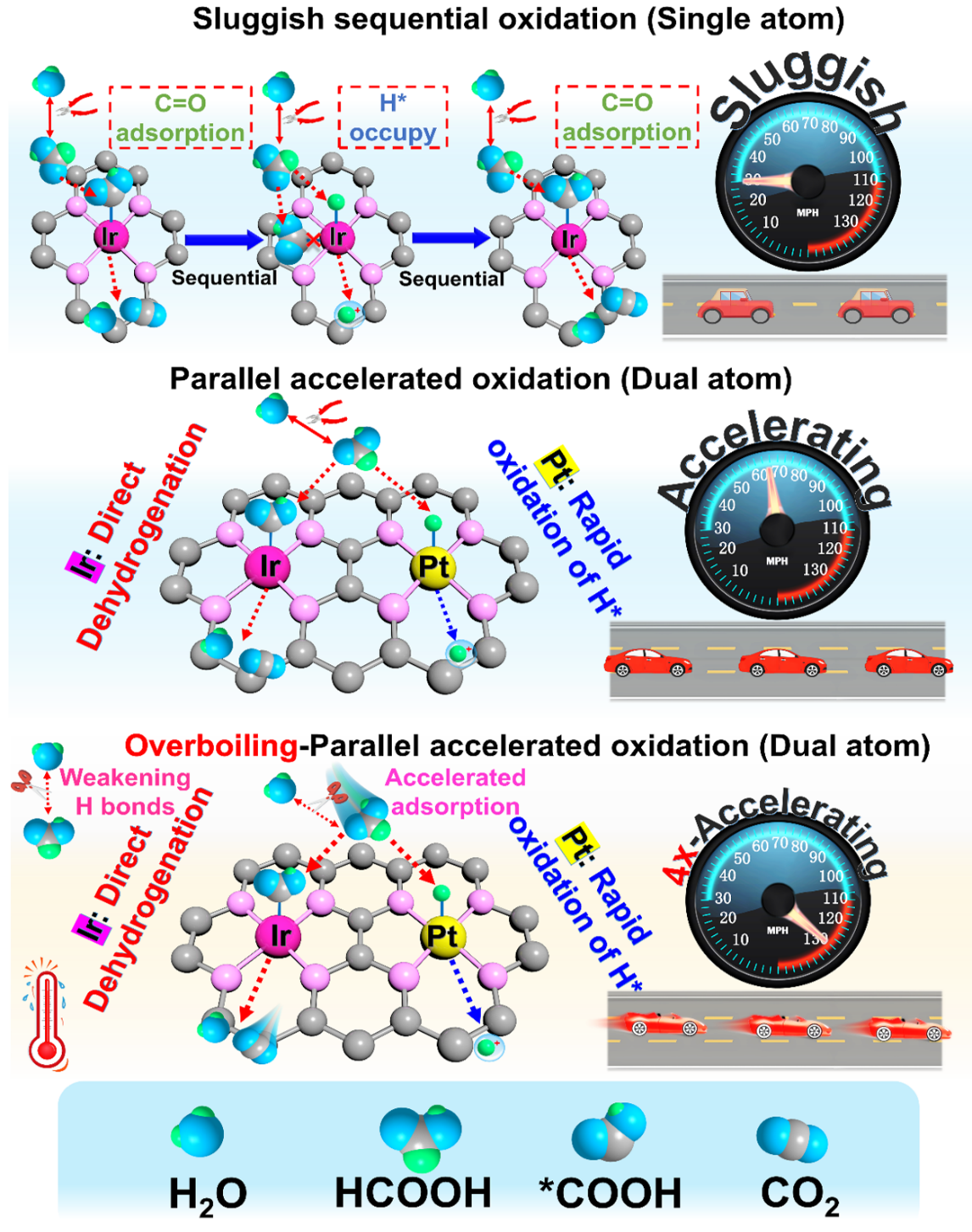
Figure 1. Schematic comparison of sequential oxidation, parallel oxidation, and over-boiling-point-enhanced parallel oxidation pathways.
Figure 1 uses a gearbox analogy to illustrate three levels of performance enhancement in the formic acid oxidation reaction. A conventional single-atom Ir catalyst follows a sequential pathway in which the same active site must complete formic acid dehydrogenation and hydrogen oxidation in turn. The rate is constrained by intermediate desorption, resembling inefficient operation in a low gear. Introducing Pt to form the Ir₁-Pt₁ dual-atomic catalyst spatially decouples the reaction: the Ir center handles the carbonyl-related oxidation step, while the Pt center simultaneously promotes hydrogen transfer, creating parallel channels analogous to a stable middle gear. Raising the reaction temperature above the boiling point then shifts the system into a high gear by weakening the liquid-phase hydrogen-bond network, improving mass transport, tuning adsorption energetics, and strengthening dual-atom cooperation. This hierarchy of active-site design, pathway control, and reaction-environment engineering provides a general framework for multistep reactions involving proton-coupled electron transfer.
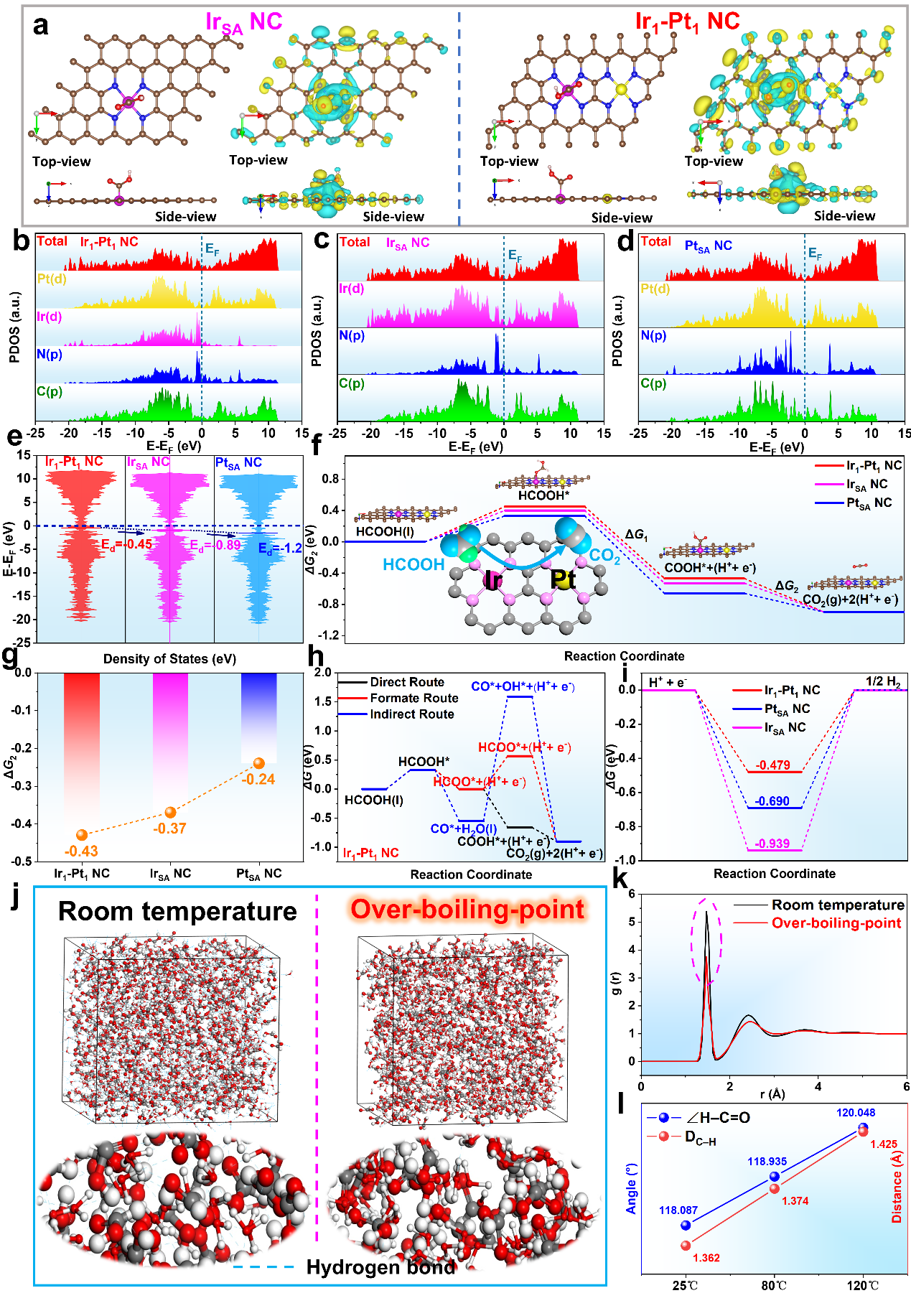
Figure 2. DFT calculations and MD simulations of the electronic structure, reaction energetics, and hydrogen-bond environment.
DFT calculations and MD simulations reveal the origin of the high activity of the dual-atomic catalyst at the atomic and electronic levels. In Ir₁-Pt₁ NC, the Ir d-band center shifts upward to -0.45 eV, closer to the Fermi level, which enhances electron transfer and adsorption of reaction intermediates and minimizes the barrier for the rate-determining *COOH-to-CO₂ step. MD simulations further show that an over-boiling-point environment, exemplified by 120 °C operation, weakens the strong hydrogen-bond network in the formic acid solution and accelerates molecular diffusion. Thermal energy also induces modest increases in bond angle and bond length, making formic acid more readily adsorbed and converted at the active sites. The calculations therefore support complementary roles for dual-atom cooperation and over-boiling-point enhancement in optimizing adsorption and reaction pathways while improving transport and molecular preactivation.
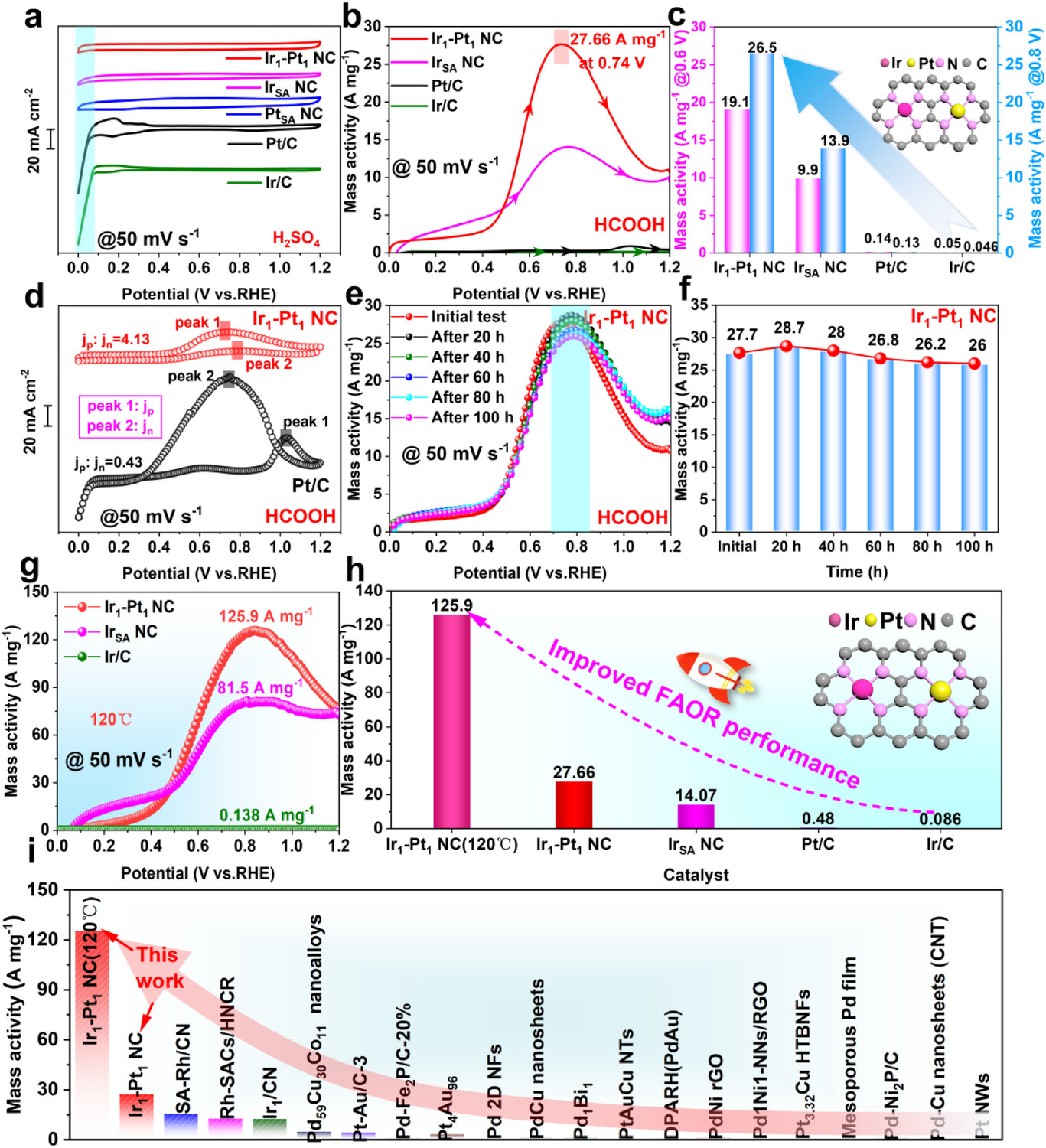
Figure 3. Electrochemical performance of Ir₁-Pt₁ NC for formic acid oxidation.
The electrochemical data confirm that Ir and Pt are atomically dispersed: in acidic electrolyte, the cyclic voltammogram lacks the pronounced low-potential hydrogen adsorption/desorption peaks typical of supported nanoparticles. In formic-acid-containing electrolyte, Ir₁-Pt₁ NC reaches a mass activity of 27.66 A mg⁻¹ at 0.74 V versus the reversible hydrogen electrode (RHE), greatly outperforming commercial Pt/C and Ir/C. The anodic-to-cathodic peak-current ratio (jₚ/jₙ = 4.13) indicates a pathway dominated by direct dehydrogenation, which suppresses poisoning by CO intermediates. After 100 h of continuous testing, approximately 94% of the mass activity is retained with only a small shift in oxidation potential.
Temperature provides a further substantial boost. At 120 °C, the mass activity rises to 125.9 A mg⁻¹, approximately 1.5 times that of the Ir single-atom catalyst under the comparison conditions and nearly 900 times that of commercial Ir/C. The apparent activation energy is only 16.6 kJ mol⁻¹. In a two-electrode cell with Ir₁-Pt₁ NC as the anode, a current density of 10 mA cm⁻² is sustained at 120 °C with a cell voltage of only 0.36 V. These results demonstrate high activity, selectivity, and durability and point to potential applications in high-temperature direct formic acid fuel cells and low-energy hydrogen production.
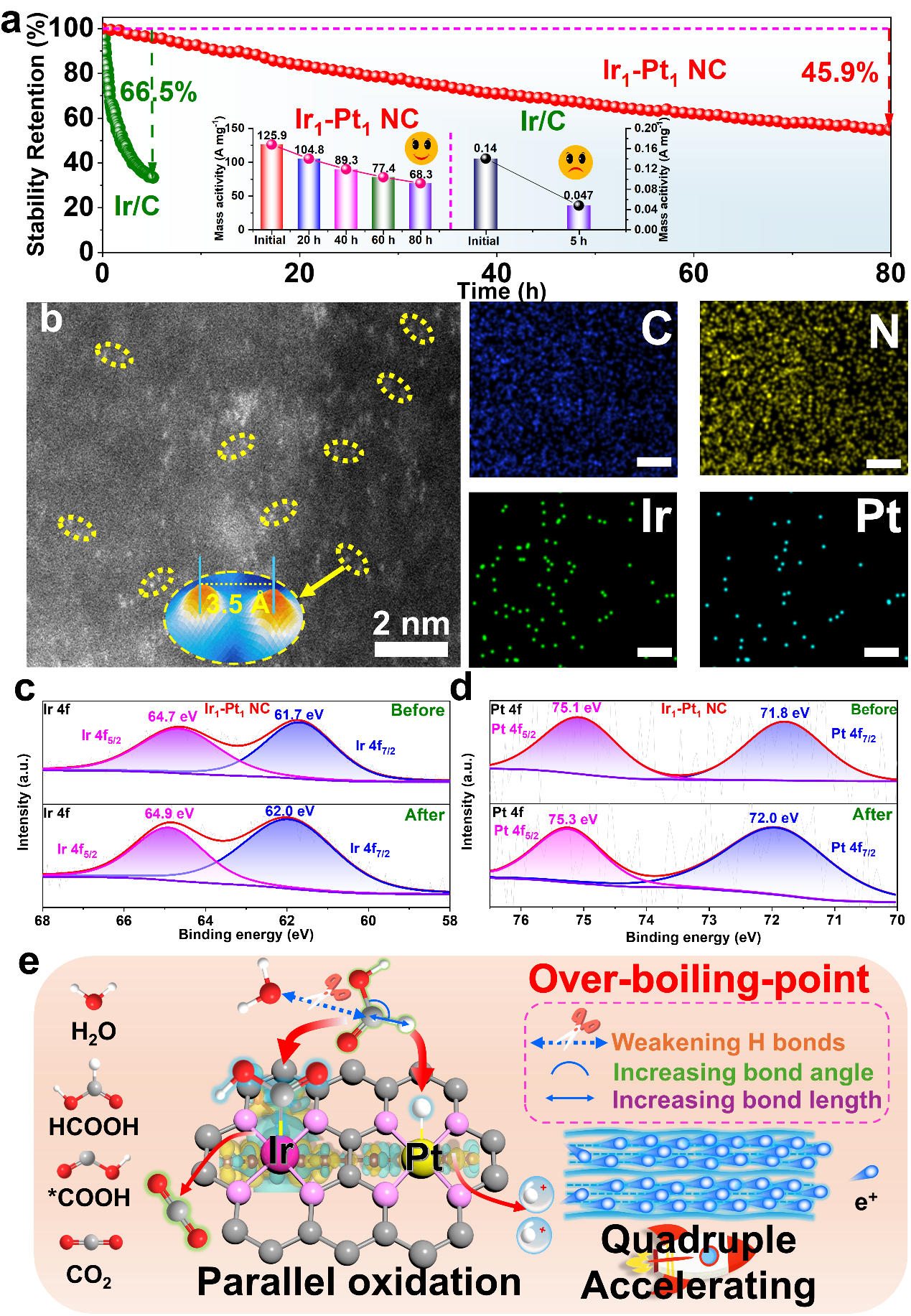
Figure 4. Long-term stability and post-reaction structural characterization under over-boiling-point conditions.
Catalyst stability under the demanding over-boiling-point environment is critical to practical use. In 0.5 M H₂SO₄ + 0.5 M HCOOH at 120 °C, Ir₁-Pt₁ NC retains 54.1% of its initial mass activity after 80 h, corresponding to 68.3 A mg⁻¹. By contrast, commercial Ir/C falls to 33.5% of its initial activity within 5 h, corresponding to 0.047 A mg⁻¹. Post-reaction aberration-corrected scanning transmission electron microscopy and energy-dispersive X-ray spectroscopy show that Ir and Pt remain uniformly dispersed on the carbon support at a separation of approximately 3.5 Å, with no detectable atomic aggregation or nanoparticle formation after high-temperature operation.
This stability is attributed to the rigid anchoring network created by the Ir-N₄/Pt-N₄ coordination structures. X-ray photoelectron spectroscopy shows small positive shifts of 0.1-0.3 eV in the Ir 4f and Pt 4f binding energies after reaction, consistent with a nitrogen coordination environment that stabilizes the electronic states of the metal centers and moderates the d-band center. This adjustment balances intermediate adsorption without blocking the active sites. The combined effects of atomic anchoring, electronic-structure regulation, and pathway cooperation enable high activity and extended operation under strongly acidic, high-temperature conditions.
Summary and Outlook:
This work constructs an Ir-N₄/Pt-N₄ dual-atomic catalyst and combines it with parallel reaction pathways and an over-boiling-point environment to overcome key limitations in formic acid oxidation. The catalyst delivers a mass activity of 125.9 A mg⁻¹ at 120 °C and maintains substantial activity during long-term high-temperature testing. Mechanistic analysis indicates that electronically coupled Ir and Pt sites separately promote C=O activation and hydrogen adsorption/desorption, thereby lowering reaction barriers and reducing intermediate accumulation. The over-boiling-point environment further weakens the solvent hydrogen-bond network, facilitates molecular transport and preactivation, and enables a cell voltage of only 0.36 V at 10 mA cm⁻².
By clarifying how atomic-scale cooperation can be coupled with reaction-environment engineering, the study offers a structure-plus-environment design principle for controlling pathway selectivity and kinetic balance in complex electrocatalytic reactions. This approach provides a direction for the design of next-generation bimetallic electrocatalysts and for the development of energy-efficient hydrogen-production technologies.
Paper Information
Title:A Breakthrough in Formic Acid Oxidation by a Dual-Atomic Ir-N4/Pt-N4 Catalyst via Parallel Reaction Pathways under Over-Boiling Point Environment
First Author:Cunpeng Duan
Corresponding Author:Junqing Pan
Affiliation:Beijing University of Chemical Technology
Journal:Angewandte Chemie International Edition
Authors:Cunpeng Duan, Jiahui Xiao, Anuj Kumar, Mohd Uabidullah, Xiaoguang Liu, Yanzhi Sun, and Junqing Pan
DOI:10.1002/ange.202521714