
Recently, Prof. Junqing Pan from Beijing University of Chemical Technology, together withassociateresearcher Zhenglu Zhu and Prof.Long Qie from Huazhong University of Science and Technology, reported a micelle-like electrolyte (QMLE) through precise molecular engineering of nonsolvating alkyl chains and fluorinated segments anchored on ethyltrimethoxysilane (ETMOS). This strategy enables an ultralow anion/solvent ratio of 0.3 and a reduced diluent/solvent ratio, overcoming the intrinsic performance limitations of localized high-concentration electrolytes (LHCEs).
Lithium metal batteries (LMBs) have attracted tremendous attention owing to their high energy density. However, the intrinsic high reactivity of lithium metal severely compromises its compatibility with conventional carbonate-based electrolytes, resulting in uncontrollable dendrite growth and extensive parasitic reactions. Although localized high-concentration electrolytes (LHCEs) have improved the compatibility with lithium metal anodes by constructing anion-dominated solvation structures, their practical application under high cut-off voltages and elevated temperatures remains challenging due to the presence of electrochemically and thermally unstable solvent species within the solvation sheath.
In this system, the strong intramolecular interactions induced by the-CF3-anchored segments not only substantially weaken the solvation capability of ETMOS but also remarkably increase its flash point, thereby promoting the formation of an anion-dominated solvation sheath and imparting excellent high-temperature stability to the electrolyte. Enabled by the QMLE, Li||Cu cells achieve an outstanding Coulombic efficiency of 98.5% under harsh conditions of 3 mA cm-2 and 3 mAh cm-2. Furthermore, Li||NCM811 (11.5 mg cm-2) cells demonstrate stable operation at a high charging cut-off voltage of 4.6 V across an elevated temperature range of 30-70℃. This work provides a universal and scalable electrolyte design strategy toward stable cycling of lithium metal batteries under high-voltage and high-temperature conditions.
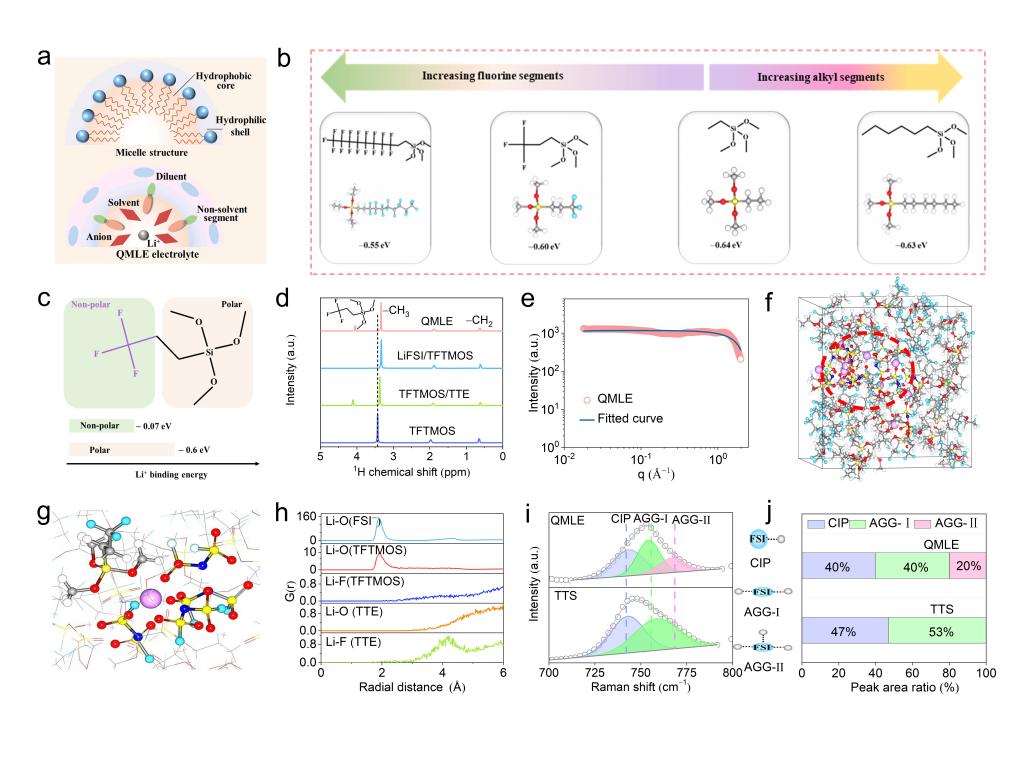
Figure 1. Design of QMLE and characterization of Li+ solvation structures.
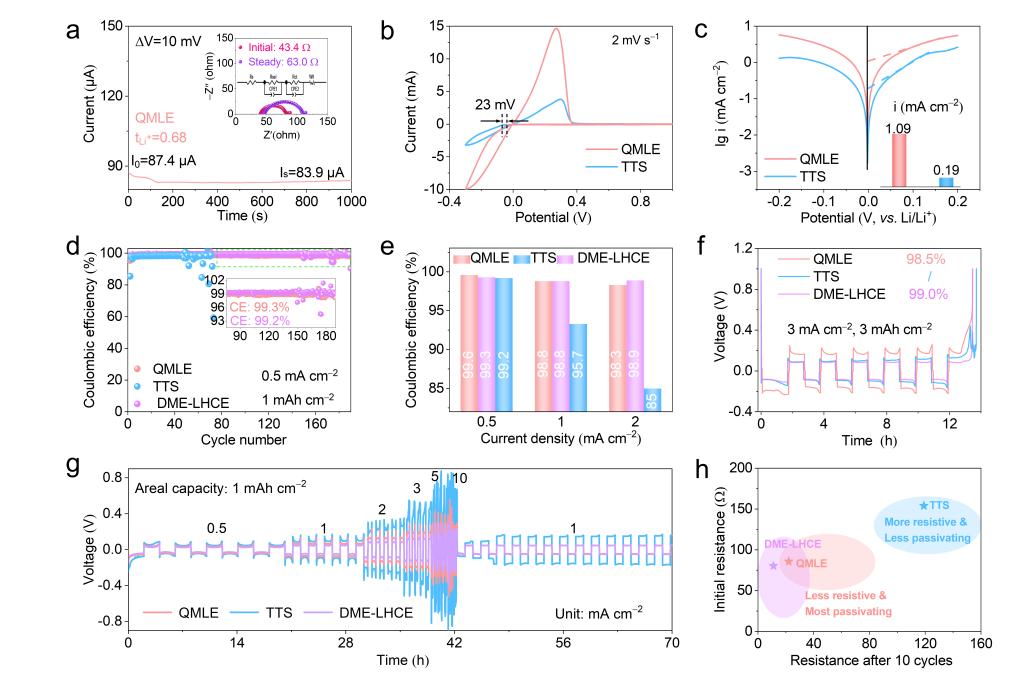
Figure 2. Lithium plating/stripping behavior in different electrolytes.
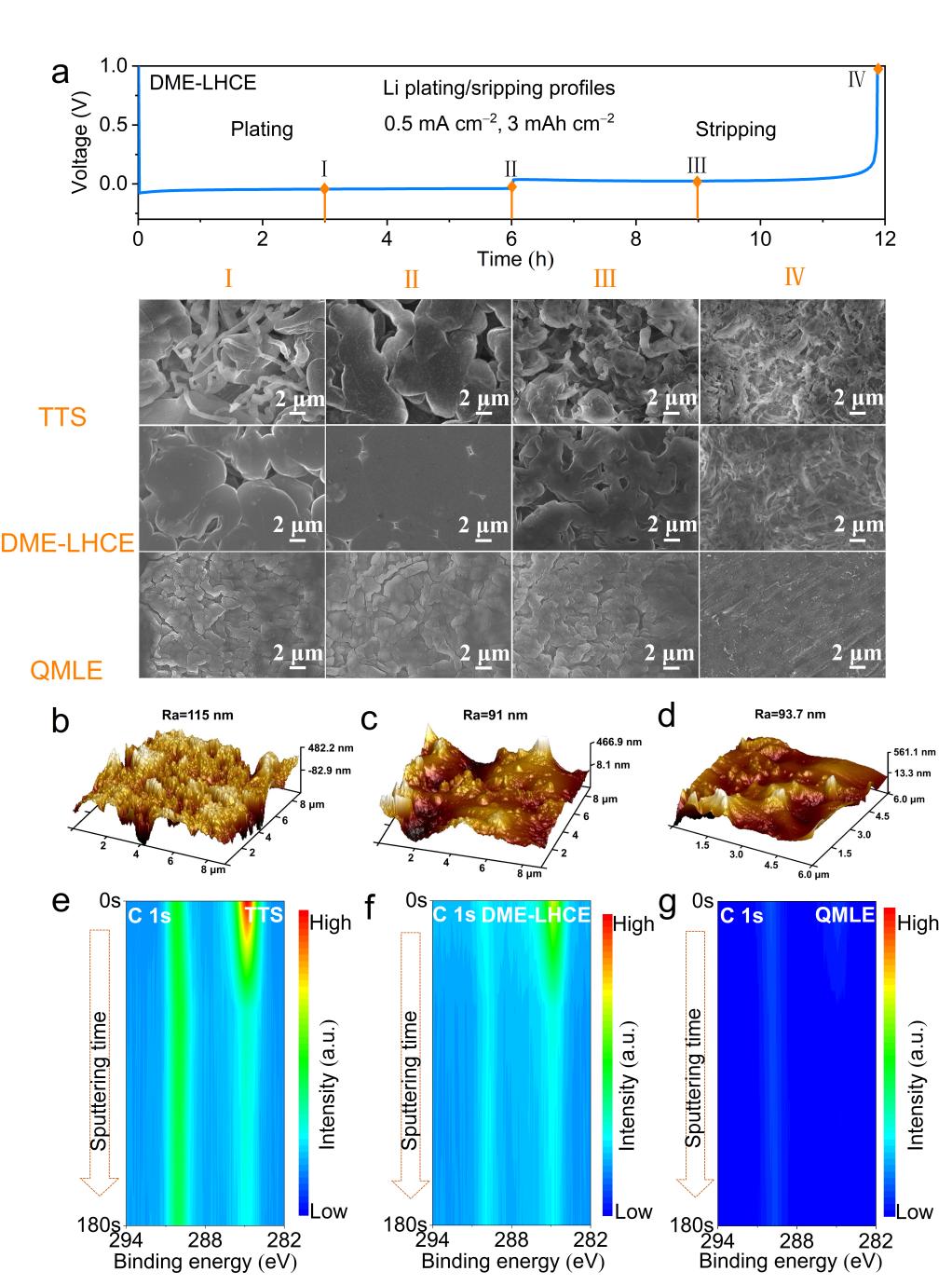
Figure 3. Morphological evolution of lithium and SEI composition characterization in different electrolytes.
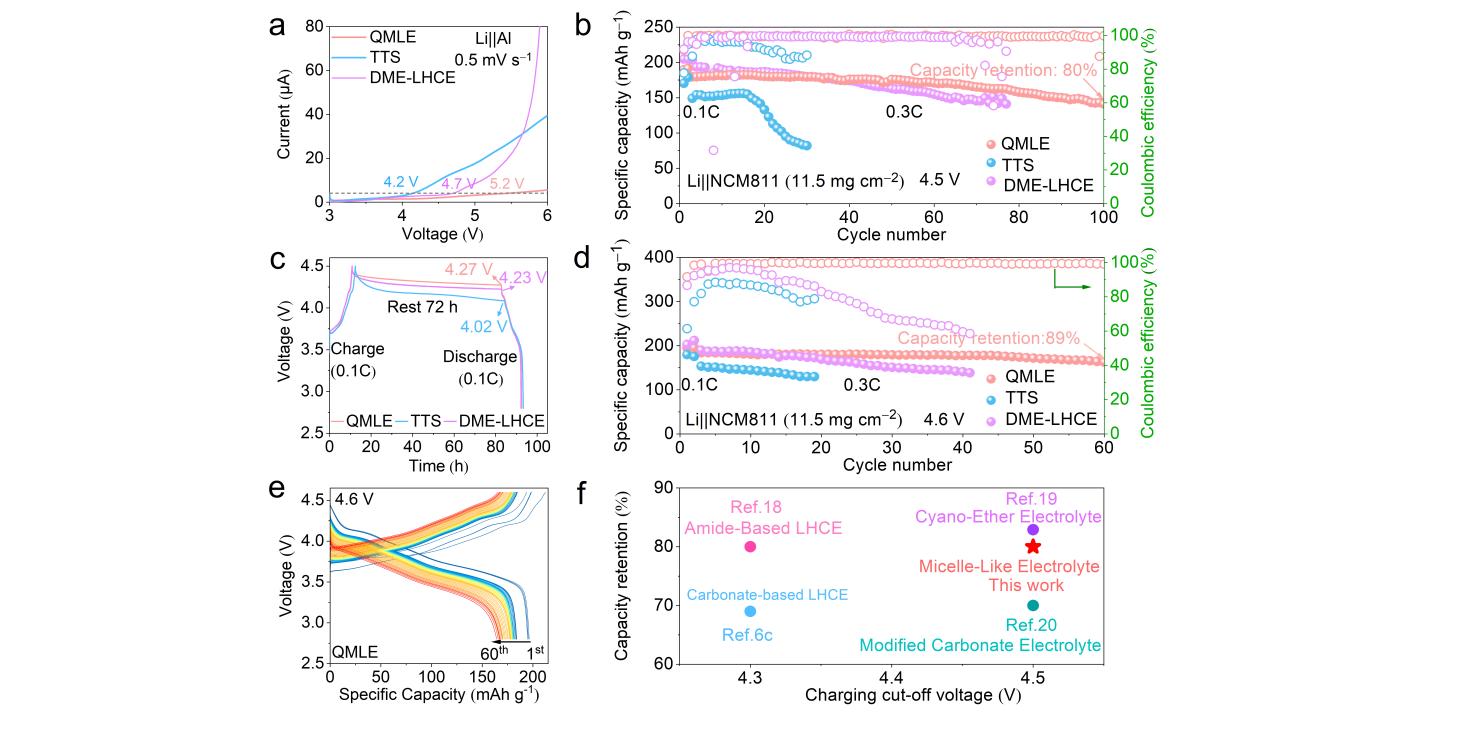
Figure 4. Electrochemical performance characterization of Li||NCM811 full cells with different electrolytes.
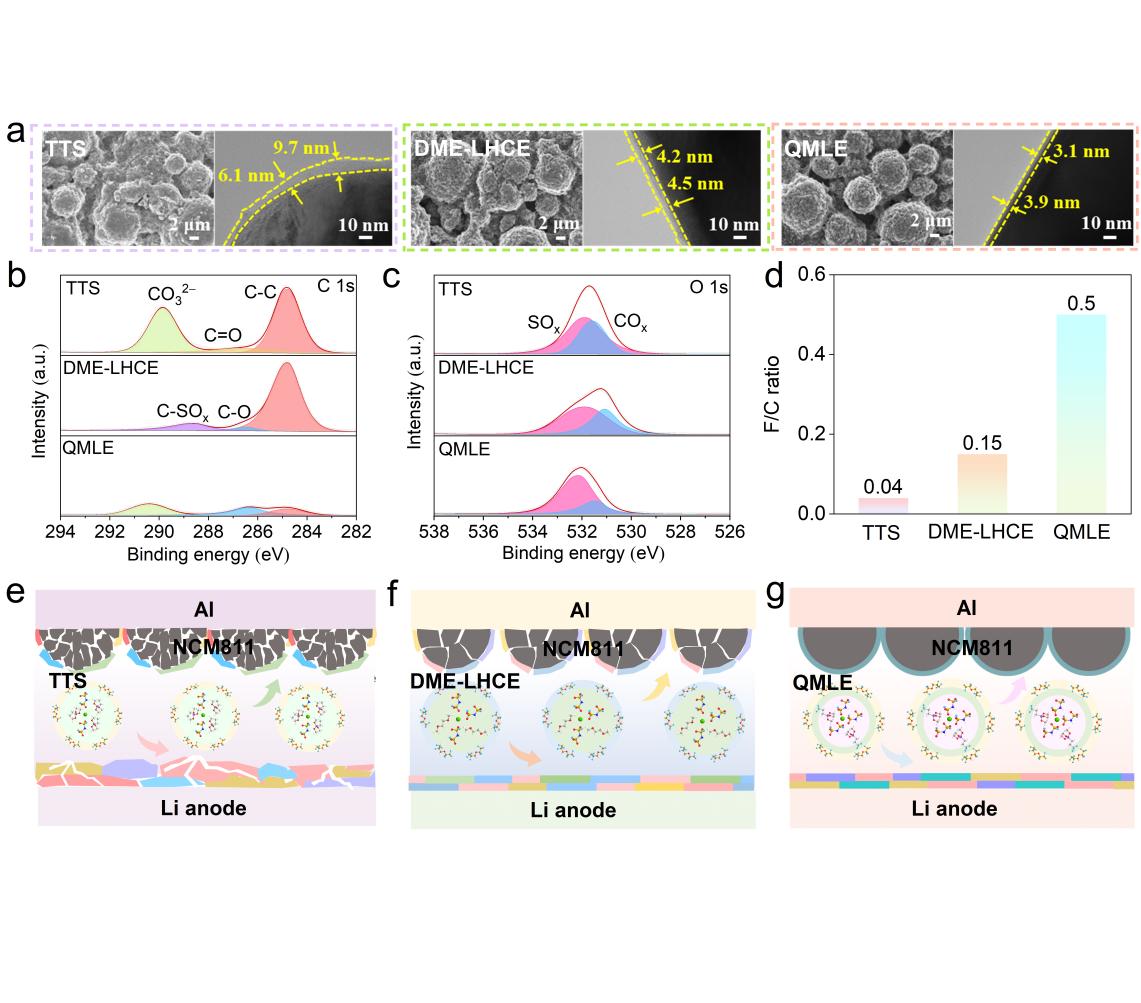
Figure 5. Morphological and interfacial composition characterization of cycled NCM811 cathodes in TTS, DME-LHCE, and QMLE.
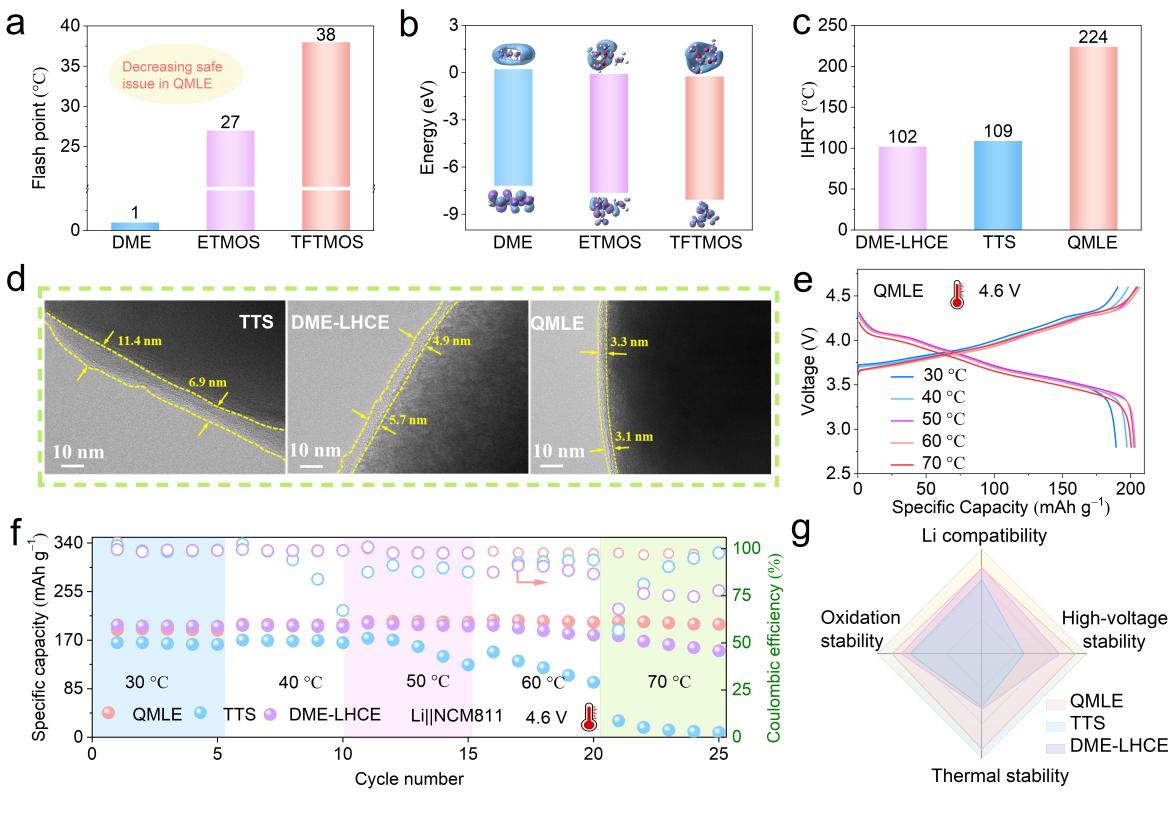
Figure 6. Comparison of the high-temperature electrochemical performance of TTS, DME-LHCE, and QMLE.
Original link:
Micelle-Like Electrolyte Design for 4.6 V Li||NCM811 Cells Workable at 70 °C.Adv. Mater.2025, e13334.https://doi.org/10.1002/adma.202513334
Author introductions:
Junqing Pan is Professor and doctoral supervisor at Beijing University of Chemical Technology. His research mainly focuses on advanced carbon materials, electrochemical energy storage and conversion, resource recycling, and sustainable energy technologies. His research interests include MOF-derived porous carbon materials for supercapacitors and metal-ion batteries, biomass-derived hard carbon materials for sodium-ion batteries, atomic-economic technologies for the recovery of valuable resources from waste batteries and solid wastes, carbon-supported single-atom catalysts for fuel cells and electrochemical water splitting, and novel flow batteries. He has published numerous research papers in prestigious journals in the fields of chemistry, materials science, and chemical engineering, including Nature Communications, Adv. Mater., Angew. Chem. Int. Ed., Adv. Energy Mater., Adv. Funct. Mater., Chem. Eng. J., and Green Chem.. He has been granted numerous national and international invention patents, with several research achievements demonstrating promising application potential. He has successively presided over various research projects, including those supported by the National Key R&D Program of China, National Natural Science Foundation of China, and other governmental and industrial programs. His research has contributed significantly to the development of advanced energy materials, sustainable resource utilization, and green energy technologies.