
Recently, the research team led by Professor Min Wei and Professor Xin Zhang from the College of Chemistry at Beijing University of Chemical Technology (BUCT) was invited to publish a News & Views article entitled “Stability in the Dilute Limit” in Nature Materials. Beijing University of Chemical Technology is the first affiliated institution of the publication. Dr. Haisong Feng, a postdoctoral researcher at the College of Chemistry and the High-Tech Research Institute, is the first author, while Professors Min Wei and Xin Zhang serve as the corresponding authors. The article provides a perspective on recent advances in understanding the sintering behavior of metal nanoparticles in highly dilute alloy systems.
Metal nanoparticles are prone to sintering under high-temperature or reducing conditions, leading to a loss of active surface area and a decline in catalytic performance. Traditionally, this process has been regarded as a collective phenomenon driven by overall thermodynamics, giving rise to various stabilization strategies, including increasing metal loading, encapsulation, and structural confinement. In this News & Views, the authors revisit a long-standing challenge in heterogeneous catalysis: what fundamentally determines the structural stability of metal nanoparticles under harsh reaction conditions?
Recent studies suggest that nanoparticle sintering is closely associated with the Ostwald ripening mechanism, in which the detachment and migration of low-coordination surface atoms, particularly those located at step edges and corners, play a decisive role. Rather than being governed by the average structure of the entire nanoparticle, sintering is controlled by the stability of these critical atomic sites. From an electronic structure perspective, the role of dopant atoms in modifying local atomic environments is summarized, highlighting that highly dilute alloying can stabilize critical surface sites and thereby regulate the stability of surface atoms at the atomic scale. Accordingly, catalyst stability can be understood not only in terms of composition or metal loading, but also through the influence of dopants on the behavior of individual surface atoms. This perspective provides a unified conceptual framework for understanding the stability of single-atom alloys and other highly dilute alloy systems.
The article also outlines future research directions. It highlights the importance of combining in situ and operando characterization techniques with first-principles calculations to systematically investigate the stabilization effects of different dopant elements at critical surface sites and to elucidate their electronic origins. Furthermore, integrating atomic-scale stability descriptors with data-driven approaches is expected to accelerate the rational design of highly dilute alloy catalysts. These perspectives provide valuable insights into the development of highly stable catalytic materials capable of operating under demanding reaction conditions.
Original Link: https://www.nature.com/articles/s41563-026-02527-4
About the Research Group
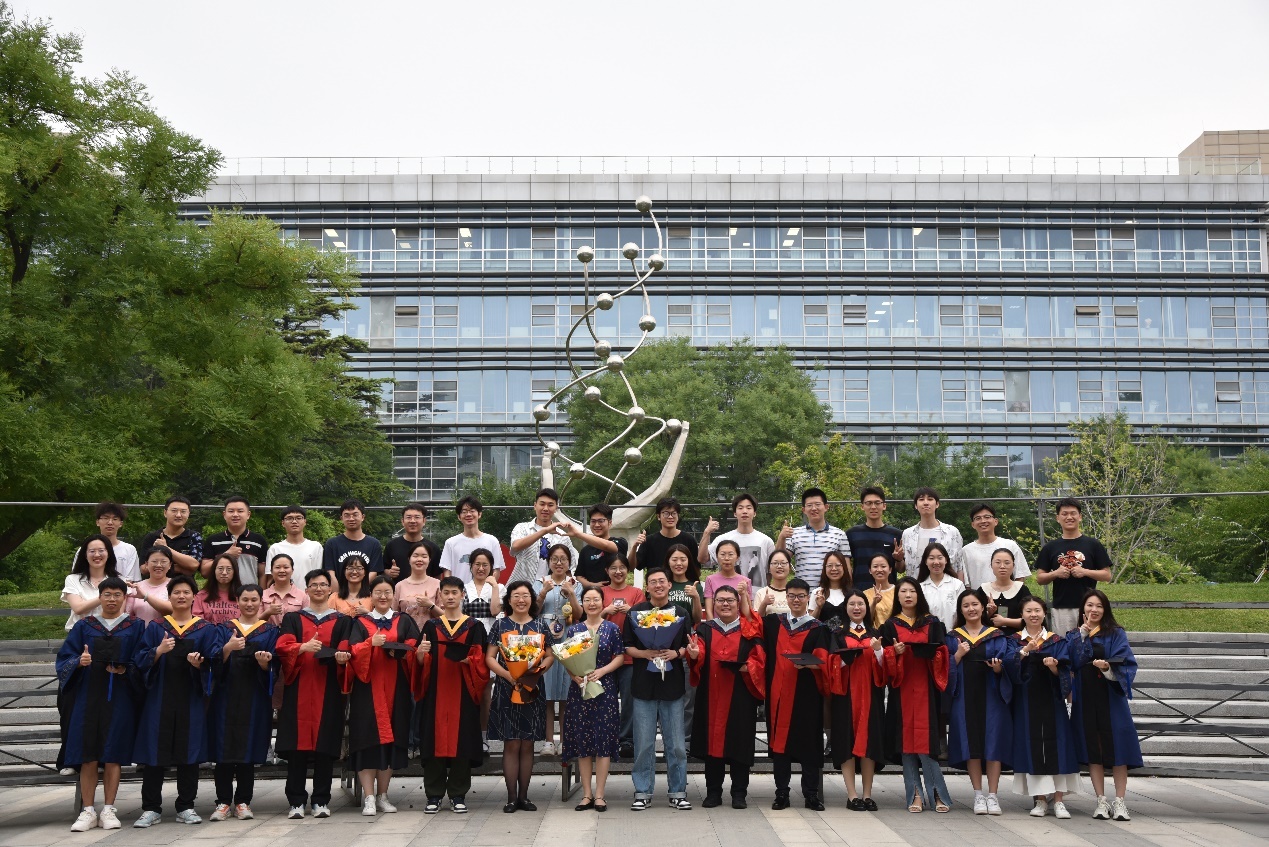
The research team led by Professor Min Wei and Professor Xin Zhang at Beijing University of Chemical Technology has long been dedicated to research in catalytic chemistry, energy catalysis, and computational catalysis. The team conducts systematic fundamental and applied research on artificial intelligence-assisted catalyst design and precision synthesis, clean hydrogen production, catalytic CO2 conversion, and the efficient utilization of biomass resources, and has achieved a series of internationally recognized research outcomes. To date, the team has published more than 200 papers in leading international journals, includingNature Materials,Nature Catalysis,Nature Communications,Journal of the American Chemical Society,Angewandte Chemie International Edition, andScience Bulletin. Integrating theoretical calculations, intelligent catalyst design, precision synthesis, and mechanistic studies, the team has established a comprehensive research framework that bridges computation and experiment, providing an effective paradigm for advancing research in energy catalysis.