
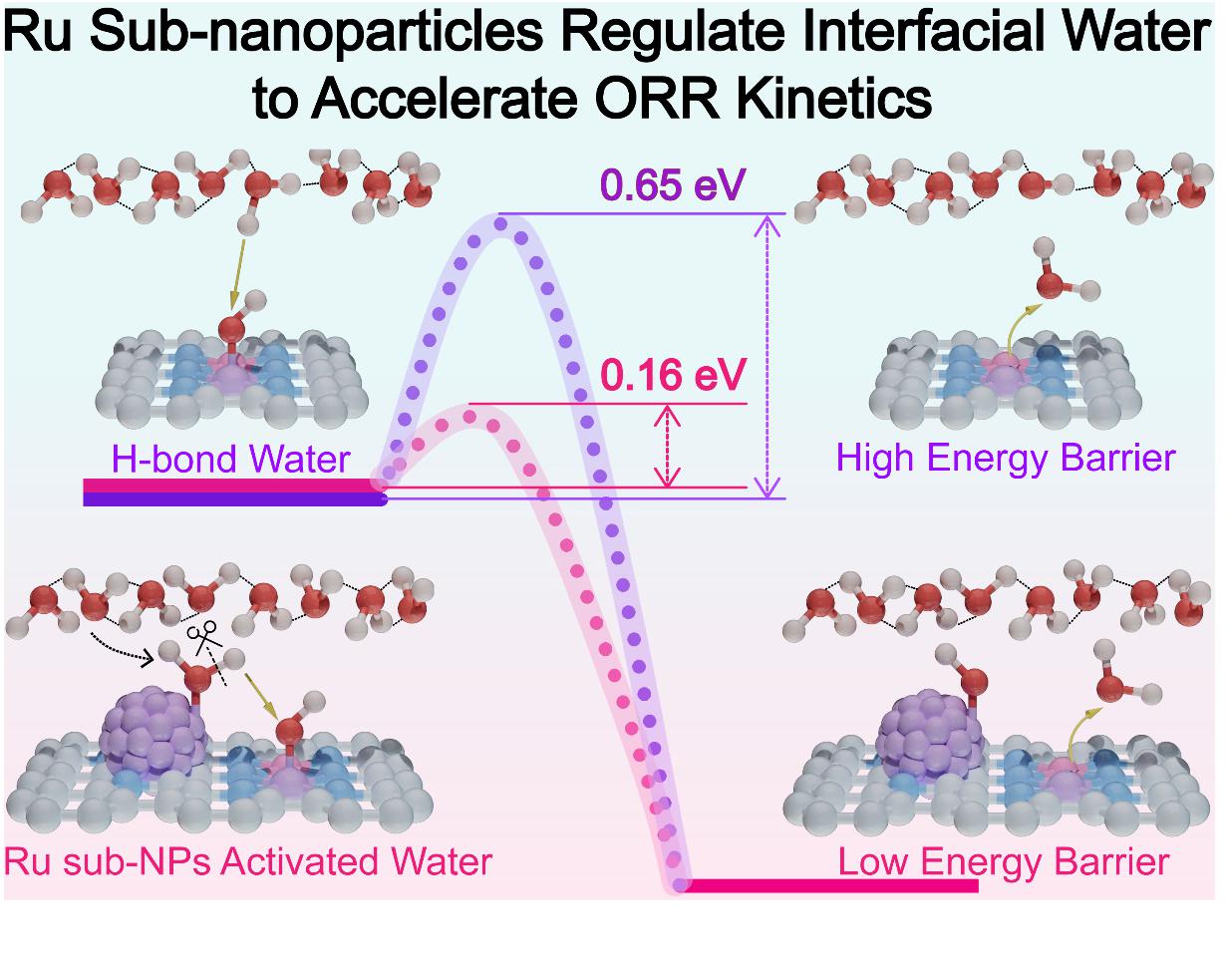
Figure 1. Schematic illustration of the CoRu/RuNPs catalyst: Ru sub-nanoparticles facilely adsorb and dissociate interfacial water, generating protons and lowering the kinetic barrier of each protonation step in ORR, especially *OH desorption (the rate-determining step), thereby accelerating the overall ORR kinetics.
Oxygen reduction reaction (ORR) is central to sustainable energy technologies, yet its sluggish kinetics have long constrained the practical deployment of fuel cells and metal-air batteries. Conventional catalyst design has predominantly focused on tuning electronic structures to optimize intermediate adsorption, while the role of interfacial water in proton transfer remains largely underexplored. Recently, the team led by Prof. Xiaoming Sun andProf. Jiazhan Li from Beijing University of Chemical Technology developed a hierarchical catalyst (CoRu/RuNPs) integrating Ru–Co diatomic sites with Ru sub-nanoparticles (1.1 nm) via a selective etching and co-confined adsorption strategy. The catalyst delivers outstanding ORR performance with a half-wave potential of 0.91 V, a peak power density of 369 mW cm–2 in zinc-air batteries, and cycling stability exceeding 1350 h.
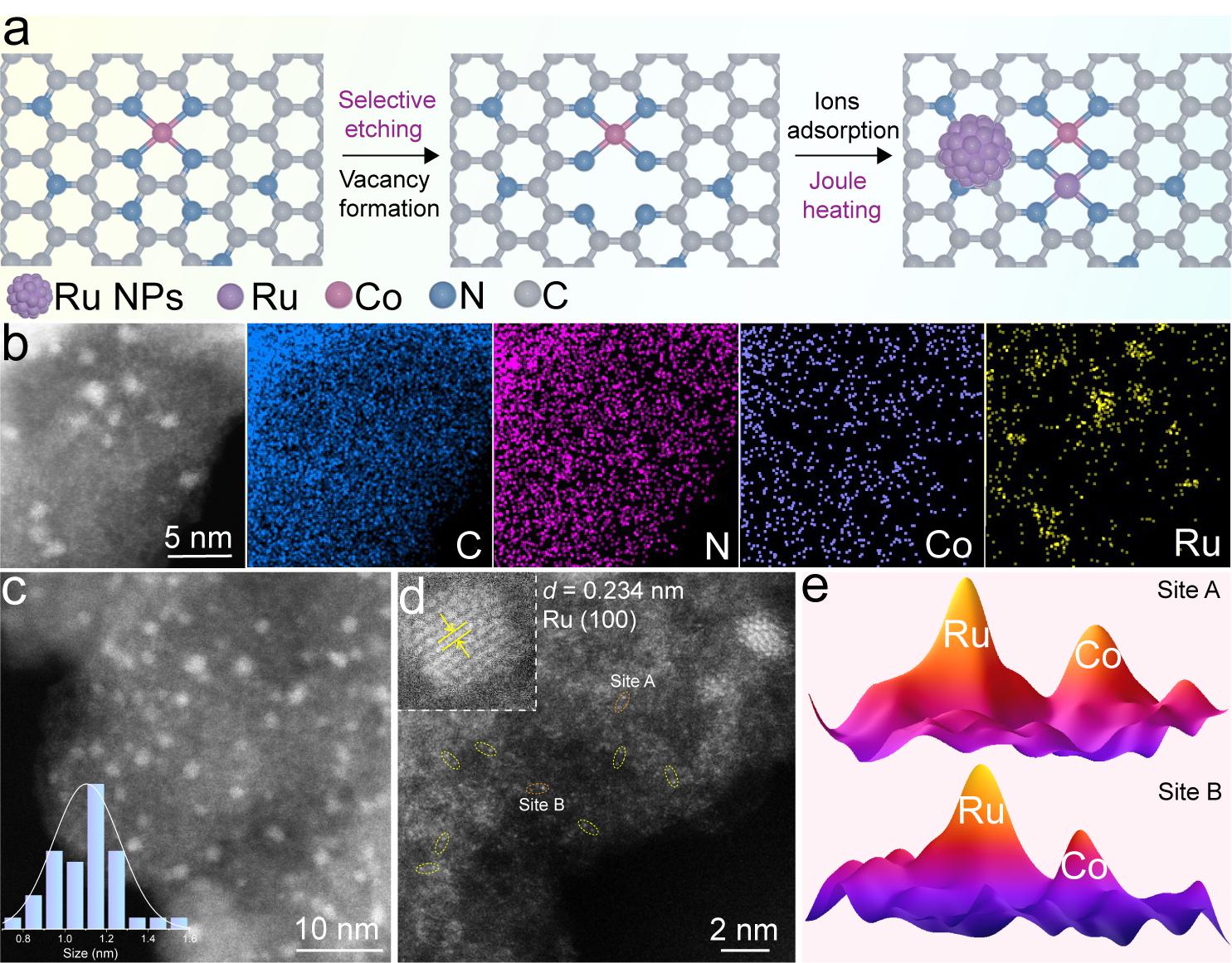
Figure 2. Synthesis and structural characterizations of CoRu/RuNPs catalyst.
The related work, entitled "Beyond Electronic Interaction: Ru Sub-Nanoparticles Reconfiguring Interfacial Water on Ru–Co Diatomic Sites for Accelerated Oxygen Reduction," was published in Angewandte Chemie International Edition (2026, 65(20), e2299436). Ph.D. students Xiangrong Jin, Yafei Liu, and Hao Sun are the co-first authors, while Prof. Jiazhan Li and Prof. Xiaoming Sun are the corresponding authors. Beijing University of Chemical Technology is the primary affiliation.
Beyond modulating the electronic structure of Ru–Co diatomic sites to weaken *OH adsorption, the adjacent oxyphilic Ru sub-nanoparticles reconfigure the interfacial hydrogen-bond network and promote water dissociation to supply protons to oxygen-containing intermediates. In situ ATR-SEIRAS, SERS, and kinetic isotope effect studies provide direct evidence for this proton-pumping function, while ab initio molecular dynamics simulations reveal that the kinetic energy barrier for *OH desorption—the rate-determining step—decreases from 0.65 to 0.16 eV. This work introduces interfacial water engineering as a powerful strategy beyond conventional electronic-structure modulation for accelerating proton-coupled electron transfer reactions.
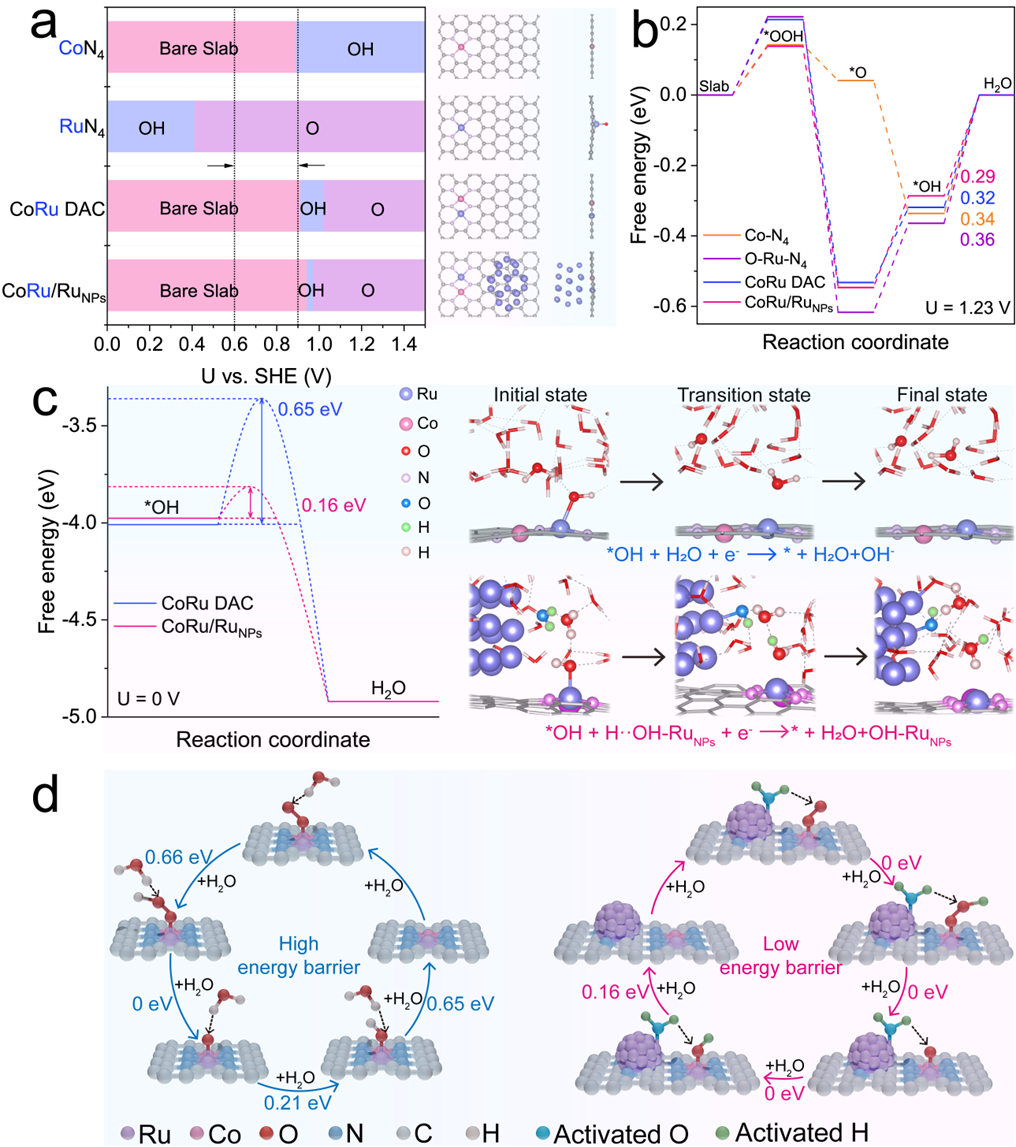
Figure 3. Theoretical calculations for the overall ORR process on CoRu/RuNPs.
Original link: https://doi.org/10.1002/anie.2299436