
A bubble-assisted cleaning strategy was proposed to address the catalyst deactivation caused by insoluble product accumulation in organic molecular oxidation reactions coupled with green hydrogen production. Taking benzylamine oxidation reaction (BOR) as a model, we activate the oxygen evolution reaction (OER) by tuning the oxidation potential, utilizing the in-situ generated oxygen bubbles to timely remove the insoluble product benzonitrile (BN) from the electrode surface, effectively overcoming electrode poisoning. The assembled anion exchange membrane water electrolysis (AEMWE) prototype device achieves a current density of 200 mA/cm2 and a faradaic efficiency of 55% at 1.65 V for over 40 hours, while co-producing high-value chemicals. Techno-economic analysis (TEA) confirms the economic viability of this strategy.
Upon addition of 0.1 M benzylamine (BA) into 1 M KOH, the polarization curve current density increased significantly to 850 mA/cm2 at 1.42 V vs. RHE with a faradaic efficiency exceeding 95%. While the current density dropped dramatically to 230 mA/cm2 within the first 50 seconds, representing a decrease of over 70%. It is attributed that the oily product first forms as tiny nuclei, gradually becomes trapped as oil islands between the nanoarrays, and finally turns into an oil film covering the active sites (Fig. 1).
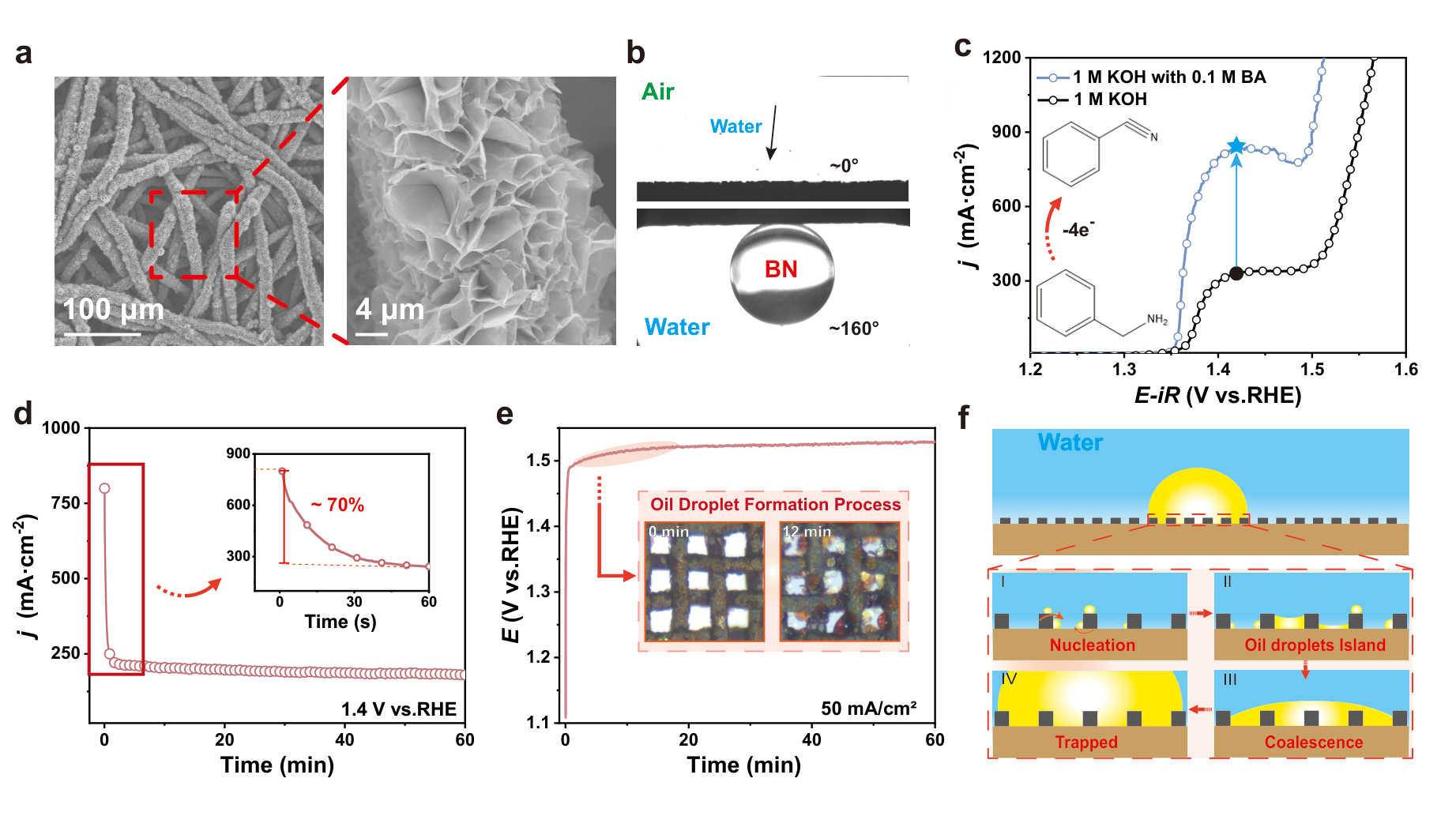
Fig. 1. Electrode deactivation caused by oily product accumulation via characterizations.
Given the significant accumulation of oily products, we propose a hybrid electrolysis method that utilizes an oxygen bubble-assisted approach for their removal. At a constant potential of 1.40 V vs. RHE for 30 min, the current density gradually declined, accompanied by the accumulation of BN oil droplets on the electrode surface. When the potential was switched to 1.50 V, OER activation caused a sudden increase in current density. From an aerial perspective, oxygen bubbles nucleated mostly under the oil layer, where they continued to grow until buoyancy and interfacial forces exceeded the adhesive forces, causing detachment and removing a substantial portion of the oil film. Side-view observations further revealed the mechanism of bubble-assisted cleaning (Fig. 2c).
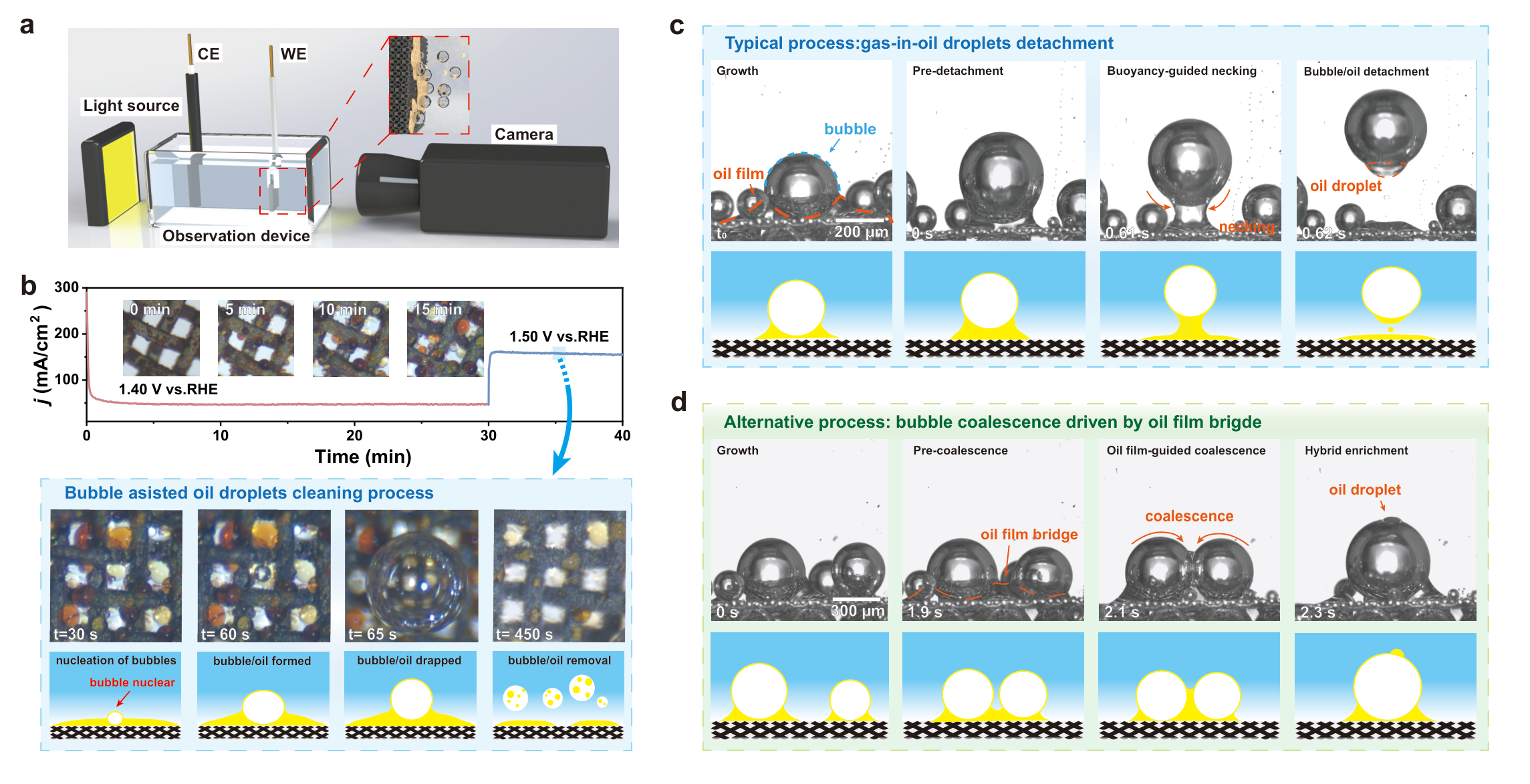
Fig. 2. In-situ observations of bubble assisted oily product removal from different views.
Based on the effectiveness of the bubble-assisted cleaning strategy, we constructed an AEMWE device (22 cm2) coupling BOR with HER, using NiFeS as the anode catalyst and commercial PtRu/C as the cathode catalyst. The cathode compartment was operated with 1 M KOH, and the anode compartment was supplied with 1 M KOH containing 0.1 M BA, with the anolyte continuously recirculated through a separation system. The OER onset voltage was 1.55 V, and after introducing BA, the flow reactor delivered an anodic current from approximately 1.40 V, ultimately achieving an ampere-level current density at 1.57 V, nearly twice that without BA. At 1.65 V, the current density was maintained at 200 mA/cm2 for over 40 h, demonstrating excellent stability. This strategy was also extended to the oxidation of other primary amines to nitriles, demonstrating versatility (Fig. 3). TEA suggested that applying appropriate potential to activate OER is beneficial for achieving higher current density and an efficient BOR process, and more importantly, matching with hydrogen production for practical electrolysis systems. This strategy simultaneously enables stable hydrogen production and value-added chemical synthesis, offering a practical route for hybrid electrolysis systems.
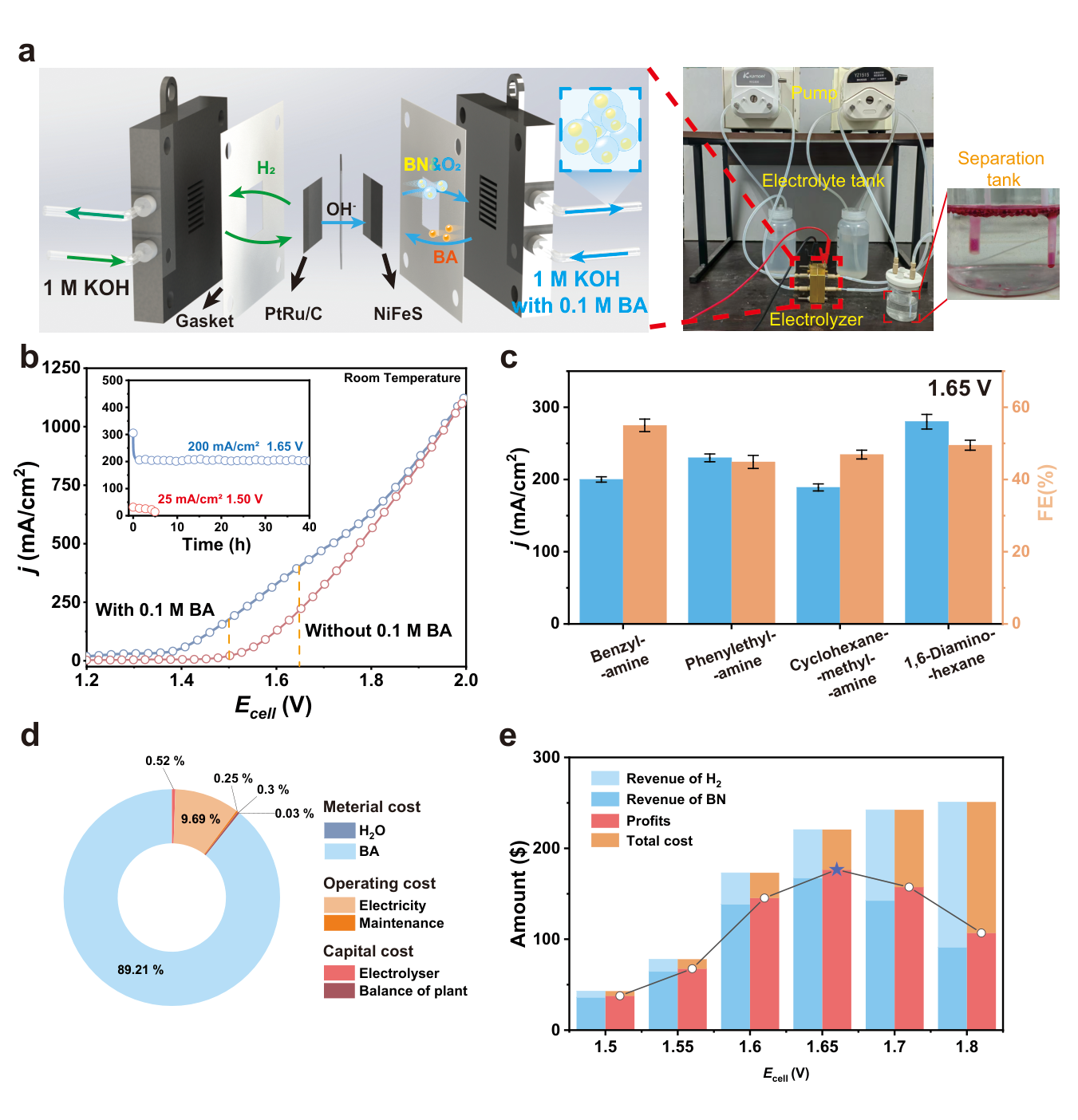
Fig. 3. Application for an AEMWE device and techno-economic analysis.
Original link: https://www.nature.com/articles/s41467-026-74878-0