
Recently, the research group led by Prof. Yufei Zhao from our institute has made significant progress in the field of green nitrogen fertilizer synthesis. By employing a synergistic facet and oxygen-vacancy spin-state regulation strategy, the team achieved direct photocatalytic C–N bond construction from N2, CO2, and H2O, offering a new pathway for green urea synthesis under mild conditions. The findings, titled "Enhanced Photocatalytic C–N Coupling by Synergistic Facet and Spin-State Modulation in Mixed-Valent WOx," were published in the Journal of the American Chemical Society. Shaoquan Li from our institute is the first author, Prof. Yufei Zhao is the corresponding author, and our institute is the first affiliation.
Traditional industrial urea synthesis relies primarily on the reaction between NH3 and CO2 under high temperature and pressure. The paper notes that this process has high energy consumption and carbon emissions, emitting approximately 910 kg of CO2 per ton of urea produced. Therefore, directly converting N2, CO2, and H2O into urea using solar energy under mild conditions represents a promising route for both carbon resource utilization and green nitrogen fixation. However, direct photocatalytic urea synthesis is highly challenging. On the one hand, the N≡N bond is extremely inert; on the other hand, C–N coupling requires multiple adsorbed intermediates to undergo activation, migration, and collision on the catalyst surface. Overly strong intermediate adsorption restricts surface diffusion, while overly weak adsorption leads to premature desorption. Consequently, merely optimizing conventional adsorption energies is insufficient to address this issue. WO3 is an important class of photocatalytic material; however, conventionalWVI has a d⁰ configuration, which suffers from localized electronic states, carrier recombination, and insufficient multi-electron activation capability. Oxygen vacancies can generate low-valenceWIII/WIV/WV centers and unpaired electrons, while different crystal facets possess distinct coordination environments and orbital structures. Thus, the authors proposed whether "facet-confined oxygen vacancies" could precisely tune the spin state of W centers, thereby reshaping the C–N coupling pathway.
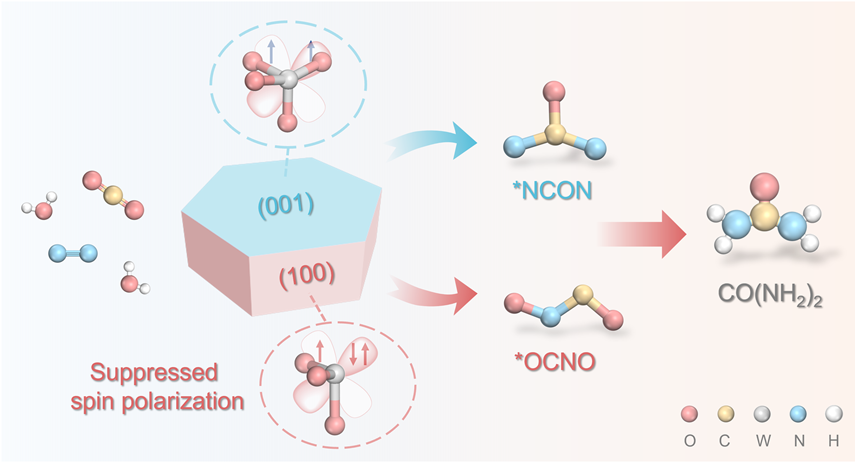
Figure 1. Schematic illustration of photocatalytic urea synthesis.
The schematic depicts the promotion of photocatalytic urea synthesis from N2, CO2, and H2O via spin-state regulation in oxygen-vacancy-rich WOx. Spin-state regulation enhances the separation of photogenerated carriers and optimizes the electronic structure of W centers, thereby improving urea yield and providing a new pathway for green fertilizer production and sustainable agriculture.
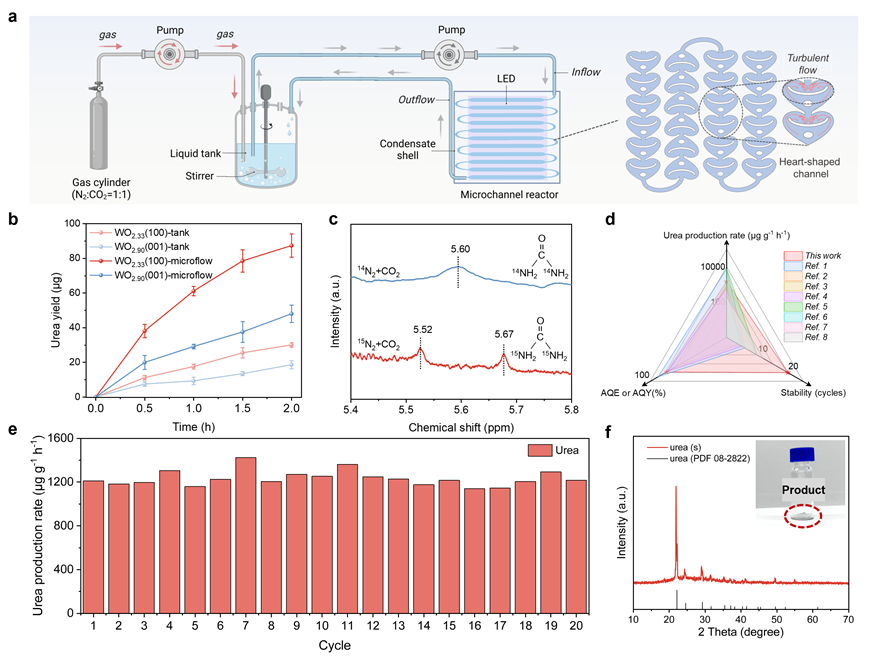
Figure 2. Photocatalytic urea generation performance and cycling stability.
Furthermore, the photocatalytic C–N coupling performances of the two catalysts were compared.
In a traditional batch reactor, WO2.33 (100) exhibited a urea generation rate of 440.25 μg g⁻¹ h⁻¹, higher than that of WO2.90 (001) (234.30 μg g⁻¹ h⁻¹). To further improve light irradiation and mass transfer efficiency, a heart-shaped microchannel reactor was designed. By regulating the circulation flow rate and illumination, the urea generation rate over WO2.33(100) was boosted to 1451.38 μg g⁻1 h⁻1, approximately 3.8 times higher than that in the batch reactor. It remained stable over 20 consecutive cycles, and crystalline urea solids could be separated from the reaction solution. Additionally, blank experiments and isotope labeling experiments were conducted to exclude the possibility of environmental contamination.
Addressing the dilemma in photocatalytic urea synthesis where "intermediate stability and mobility are difficult to reconcile," this work proposes a novel strategy of facet-confined oxygen-vacancy-induced spin-state regulation. By stabilizing low-spinWIII-derived d3 centers, WO2.33(100) simultaneously enhances the adsorption and activation of N2/CO2 and improves photogenerated carrier separation. On the other hand, it moderately weakens the *NO–W interaction, preserving the surface migration capability of *NO. Ultimately, this opens a low-barrier C–N coupling pathway mediated by *NO/*CO. For photocatalytic reactions requiring synergistic migration and coupling of multiple intermediates, spin-state engineering may emerge as an important design dimension beyond conventional adsorption-energy tuning. The paper further demonstrates the potential for on-demand urea fertilizer production from N2, CO2, water, and light, offering new catalytic material design concepts for distributed green urea synthesis toward smart agriculture.